
Most Bahamas Roofs Have This Weak Spot. Is Your Building at Risk?

The Leak That Started Somewhere Else
It starts with a small water stain on the ceiling.
At first, it looks harmless. A little paint damage. Maybe a damp patch after a night of heavy rain. Your maintenance team checks the room, places a bucket underneath the drip and assumes a quick repair will solve the problem.
Then the next storm arrives.
The stain grows. Water appears in another area. Suddenly, you're dealing with damaged ceiling tiles, disrupted operations, maintenance expenses and questions from tenants, guests or senior management.
Here's the frustrating part: the real problem may not be in the area where you see the leak.
For many buildings in The Bahamas, one of the most vulnerable parts of the roof is where different components meet: around drains, air-conditioning units, vents, flashing, roof edges and membrane seams. These details may occupy only a small part of the roof, but a failure in any one of them can allow water into the building.
For facility managers, building managers and property owners, this creates an important question: When was the last time anyone checked these vulnerable areas properly?
Let's look at what puts Bahamas roofs at risk, how to spot trouble early and what you can do to protect your property before a minor issue becomes an expensive repair.
The Hidden Weak Spot in Many Bahamas Roofs
If you manage a commercial property, hotel, condominium, office building or other facility, you probably pay attention to the overall condition of your roof.
You might check for obvious damage, arrange repairs after a storm or schedule maintenance when a leak appears.
But the roof's most vulnerable points aren't always the largest or most visible areas.
1. Roof Penetrations and Flashing
Look at everything that passes through or connects to your roof.
Air-conditioning equipment, ventilation pipes, plumbing vents, electrical conduits and other rooftop installations all create points where the roofing system must form a reliable seal.
These areas depend on properly installed flashing, compatible sealants and careful workmanship.
Over time, intense sunlight, temperature changes, moisture and building movement can cause sealants to deteriorate. Flashing may loosen, and poorly detailed connections can become entry points for rainwater.
The challenge is that the damage may remain hidden until water travels through the roof assembly and appears inside the building.
What to look for: Cracked or separated sealant, loose flashing, damaged membrane around equipment bases and signs of moisture near ceiling penetrations.
2. Roof Drains and Areas Where Water Collects
A roof doesn't just need to keep water out. It also needs to move water away efficiently.
Heavy rainfall can quickly expose drainage problems, especially on flat and low-slope commercial roofs.
Leaves, debris and other obstructions can restrict drains and gutters. Poor drainage design, blocked outlets or changes in the roof surface can also leave water standing longer than intended.
Some ponding can indicate a more serious issue with roof slope or drainage capacity. Persistent standing water deserves professional assessment because it can contribute to material deterioration and place additional loads on the roof structure.
For a busy commercial property, the consequences can extend beyond the roofing system. Water intrusion may affect offices, electrical equipment, inventory, guest rooms and daily operations.
What to look for: Blocked drains, overflowing gutters, slow-draining areas, recurring puddles and water stains beneath low-slope roof sections.
3. Membrane Seams and Roof Edges
Many commercial buildings in The Bahamas use low-slope roofing systems. These roofs often rely on membranes to create a continuous waterproof barrier.
However, the membrane itself is only one part of the system.
Seams must be properly joined, edges must be secured, and transitions between the roof and surrounding structures must be detailed correctly.
With TPO membrane roofing, for example, heat-welded seams help create a watertight connection. Poor installation, physical damage, incompatible repairs or deterioration around details can compromise that protection.
Roof edges also deserve attention because strong winds can place significant stress on perimeter details and exposed components.
What to look for: Open seams, punctures, lifted edges, loose flashing, blistering and visible separation around roof transitions.
The takeaway is simple: A roof can look perfectly fine from the ground while its most important protective details need attention.

Why The Bahamas' Climate Makes Roof Maintenance Essential
Roofing systems in The Bahamas face a combination of environmental pressures that can gradually weaken vulnerable areas.
Intense Sunlight and Heat
Prolonged exposure to ultraviolet radiation and heat can accelerate the aging of certain roofing materials, coatings and sealants.
As materials age, they may become less flexible, crack or lose some of their protective qualities.
Heavy Rainfall and Tropical Weather
A roof that performs adequately during light rain may reveal problems during a heavy downpour.
Water can accumulate faster than an obstructed drainage system can remove it, while wind-driven rain can test flashing, roof edges and vulnerable connections.
Tropical storms and hurricanes introduce additional concerns, including wind uplift, flying debris and damage to exposed roof components.
Coastal Exposure
Salt-laden air can contribute to corrosion in metal roofing components, fasteners, flashing and rooftop equipment.
For properties close to the coast, regular inspections can help identify corrosion and deterioration before they compromise the roof system.
These conditions make proactive maintenance especially valuable. Waiting for visible leaks means waiting until a roofing issue has already affected the building.
The Real Cost of Ignoring a Small Roofing Problem
Imagine managing a hotel, office complex or condominium building.
A small leak develops around an air-conditioning unit. Nobody notices it during the first few weeks because the water enters a concealed section of the roof assembly.
Eventually, a heavy rainstorm pushes more water into the affected area.
Now, the maintenance team must investigate the leak, arrange repairs, replace damaged interior finishes and coordinate access to affected spaces. Depending on the building, there may also be equipment damage, tenant complaints or interruptions to business.
What could have been a relatively straightforward roofing repair may now involve several trades and multiple areas of the property.
This is why roof maintenance should be viewed as part of asset management, not simply an expense to address when something breaks.
For property and facility managers, the objective is to reduce avoidable damage, plan expenditure more effectively and keep the building operational.
Five Practical Ways to Protect Your Roof
You don't have to wait for the next storm to find out whether your roof has a problem.
Here are five practical steps you can incorporate into your property's maintenance plan.
1. Schedule Professional Roof Inspections
Arrange inspections at regular intervals, with frequency based on the roof type, age, condition, exposure and manufacturer recommendations. Inspections after significant storms are also advisable when conditions permit safe access.
A professional assessment should examine the roofing surface, seams, penetrations, flashing, roof edges and drainage components.
2. Keep Drains, Gutters and Downspouts Clear
Debris can interfere with the roof's ability to shed water.
Include drainage checks in your maintenance schedule, particularly before periods of heavy rainfall and after storms.
For larger facilities, document the condition of drainage points and confirm that identified issues have been addressed.
3. Investigate Recurring Leaks Properly
If the same leak keeps returning, don't assume another layer of sealant will solve it.
The visible water stain may be several feet away from the actual entry point. A proper investigation should identify the source, assess the surrounding materials and determine whether a localized repair or a more extensive solution is needed.
4. Document Roof Condition and Repairs
Keep records of inspection findings, photographs, repairs, warranties and recurring problem areas.
These records help maintenance teams track deterioration, support budget requests and make better-informed decisions about repair versus replacement.
They also give property managers a clearer picture of how the roof is performing over time.
5. Review Whether Your Roofing System Still Meets the Building's Needs
An older roof may require more frequent repairs. A system that worked for a previous building use may no longer be suitable after equipment upgrades or changes to the property.
If repairs are becoming increasingly frequent, consider a professional assessment of the existing roof and the options for replacement.
The right decision should account for the building's structure, drainage, exposure, operating requirements and long-term maintenance needs.

Could a TPO Membrane System Be Right for Your Building?
If you manage a commercial property with a flat or low-slope roof, a TPO membrane system may be worth considering.
TPO, or thermoplastic polyolefin, is a single-ply roofing membrane commonly used on commercial buildings. Its seams can be heat-welded to create continuous waterproof connections, while its reflective surface can help reduce solar heat absorption when the system is appropriately selected and installed.
However, TPO isn't automatically the best solution for every building.
The existing roof assembly, drainage, insulation, structural condition, perimeter details and intended use all influence whether it is suitable.
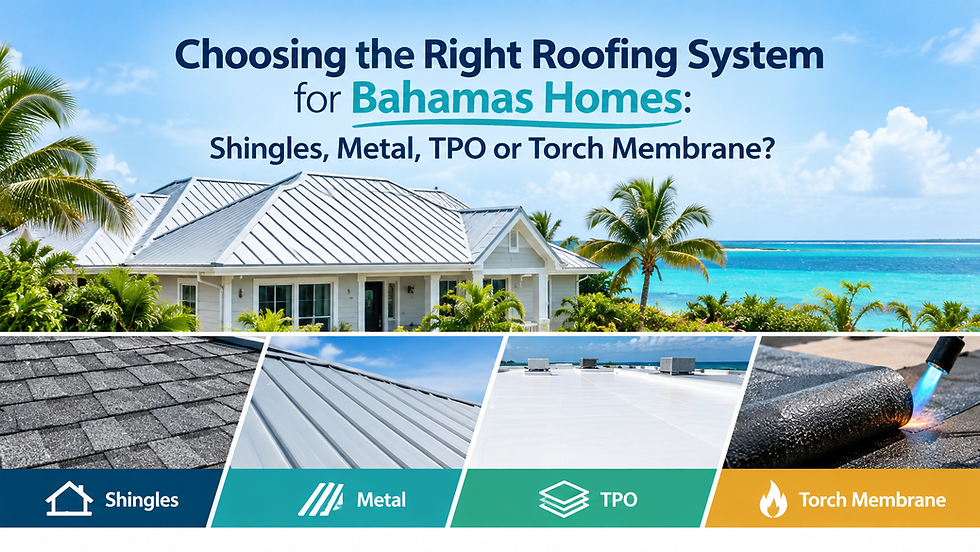
Other options may include torch-applied membrane systems, PVC membrane roofing, metal roofing or shingles, depending on the building and its requirements.
The important thing is to choose a roofing system based on a proper assessment rather than selecting materials on price alone.
How Integrity Roofing & Construction Can Help
At Integrity Roofing & Construction, we understand that a reliable roof is essential to protecting your property, occupants and day-to-day operations.
Our roofing services in The Bahamas include commercial and residential roofing, roof inspections, repairs, maintenance and roof replacement. Available roofing systems include:
TPO membrane systems for suitable commercial and residential applications.
Torch membrane systems for compatible low-slope roofing assemblies.
PVC membrane systems for appropriate roofing applications.
Metal roofing for properties requiring a suitable metal roof solution.
Shingle installation for compatible residential and other pitched-roof applications.
Gutter and downspout services to support effective rainwater management.
Whether you're dealing with recurring leaks, planning a roof replacement or establishing a preventive maintenance programme, our team can help you assess your needs and explore suitable solutions.
Don't Wait for the Ceiling to Tell You There's a Problem
The weakest point of a roof isn't always the place that looks the most damaged.
Sometimes, it's a small detail around a drain, a deteriorating seal around rooftop equipment or a seam that has gradually lost its integrity.
For buildings across The Bahamas, these seemingly minor issues can become costly when heavy rainfall, intense sunlight, coastal exposure and tropical weather put the roofing system to the test.
As a building or facility manager, you have an opportunity to act before the damage spreads.
Start with an inspection. Pay attention to drainage and vulnerable connections. Keep accurate maintenance records, and address problems before they disrupt your building's operations.
Your roof protects everything beneath it. Give it the attention that protection deserves.
Ready to Check Your Roof's Weak Spots?
Don't wait for the next heavy downpour to discover a problem.
Contact Integrity Roofing & Construction to discuss a professional roof inspection, repair, maintenance plan or replacement for your property in The Bahamas.
From targeted repairs to complete roofing solutions, including TPO membrane, torch membrane, PVC membrane and metal roofing systems, we're ready to help you protect your investment.
Request your roofing estimate today: https://www.ircbahamasltd.com/estimate

Comments